PRP & PRF Hair Restoration: Complete Guide to Natural Hair Regrowth
Written by
Nia Zameni, MSN, FNP
Allergan National Trainer
Hair loss affects millions of people, impacting confidence and self-image. The good news? PRP (Platelet-Rich Plasma) and PRF (Platelet-Rich Fibrin) hair restoration offer a natural, non-surgical solution that uses your body's own healing powers to stimulate hair regrowth. At Eternia Medspa in San Francisco, we've helped countless patients restore their hair and their confidence.
Understanding Hair Loss
Hair loss can result from genetics (androgenetic alopecia), hormonal changes, stress, nutritional deficiencies, or medical conditions. In most cases, hair follicles aren't dead. They're dormant. This is where PRP and PRF come in: by delivering concentrated growth factors directly to the scalp, we can wake up these sleeping follicles.
How PRP Hair Treatment Works
The treatment process is straightforward:
- We draw a small amount of your blood (similar to a lab test)
- The blood is processed in a centrifuge to concentrate the platelets
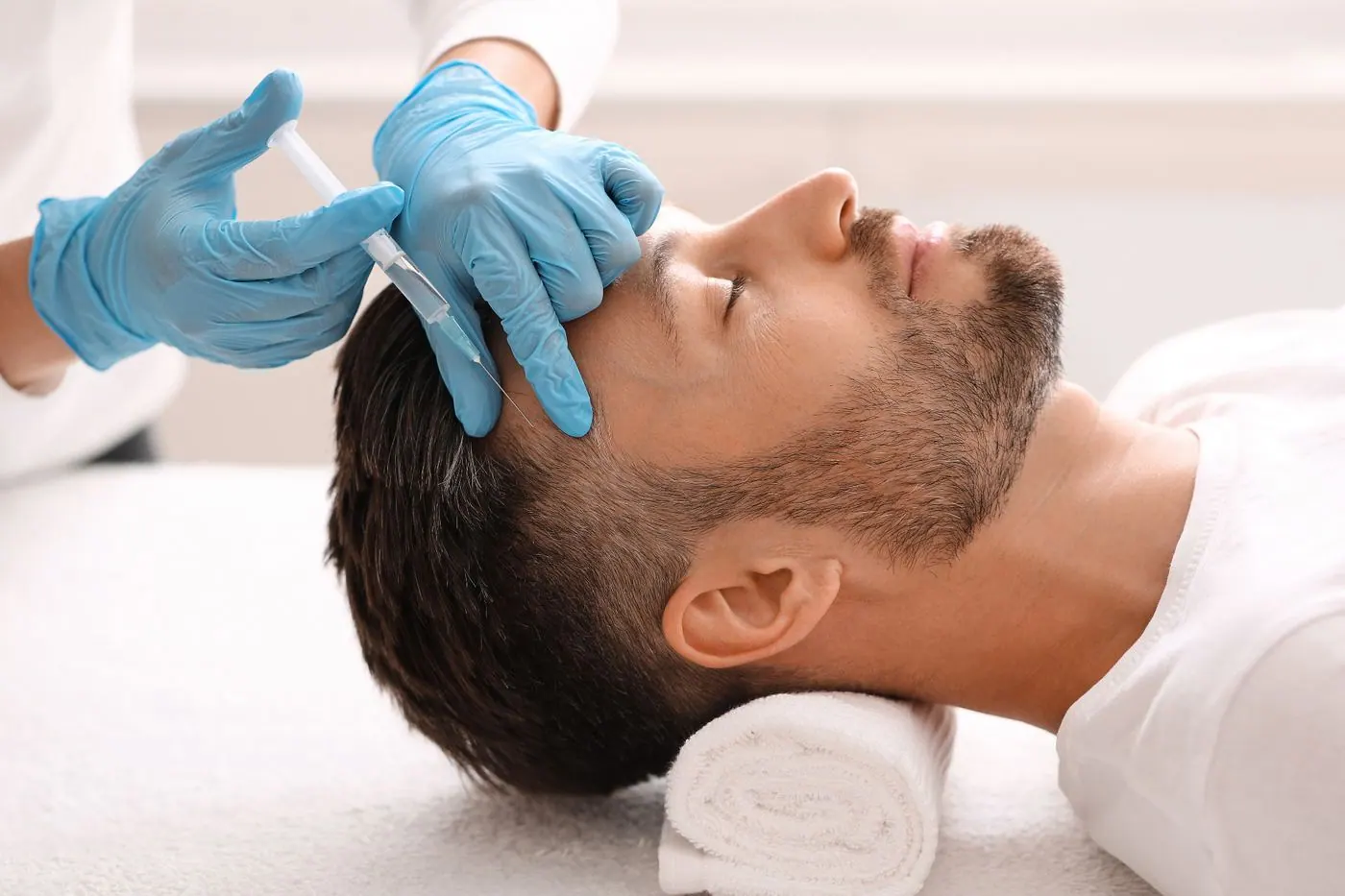
- The platelet-rich plasma is injected into areas of thinning hair
- Growth factors stimulate follicles and promote new growth
The entire treatment takes about 60-90 minutes, and you can return to normal activities immediately.
PRP vs. PRF: What's the Difference?
While both treatments use your blood's healing properties, PRF is the evolution of PRP:
- • No additives - PRF is processed without anticoagulants
- • Higher concentration - More platelets and white blood cells
- • Slow release - Growth factors release over 7-10 days vs. hours
- • Contains fibrin - Acts as a natural scaffold for healing
At Eternia, we offer both options and often recommend PRF for its enhanced regenerative potential.
Who Is a Good Candidate?
PRP/PRF hair restoration works best for:
- • Early to moderate hair thinning
- • Androgenetic alopecia (male and female pattern baldness)
- • Those wanting to maintain existing hair
- • Post-transplant patients (enhances graft survival)
- • Anyone seeking a natural, drug-free approach
The treatment is less effective for completely bald areas where follicles are no longer present.
Results and Expectations
Patience is key with hair restoration. Here's a typical timeline:
- • 1-2 months: Decreased shedding
- • 3-4 months: Fine "baby hairs" begin appearing
- • 6-9 months: Noticeable improvement in density
- • 12 months: Full results visible
Most patients need 3-4 treatments initially, with maintenance sessions every 6-12 months to sustain results.
Combining with Other Treatments
For enhanced results, PRP/PRF can be combined with:
- • Microneedling (creates micro-channels for better absorption)
- • Low-level laser therapy
- • Topical treatments (minoxidil, finasteride)
- • Nutritional optimization