PRP Knee & Elbow Injections: What They Are and Who They Help
A plain-English look at platelet-rich plasma for stubborn joint and tendon pain
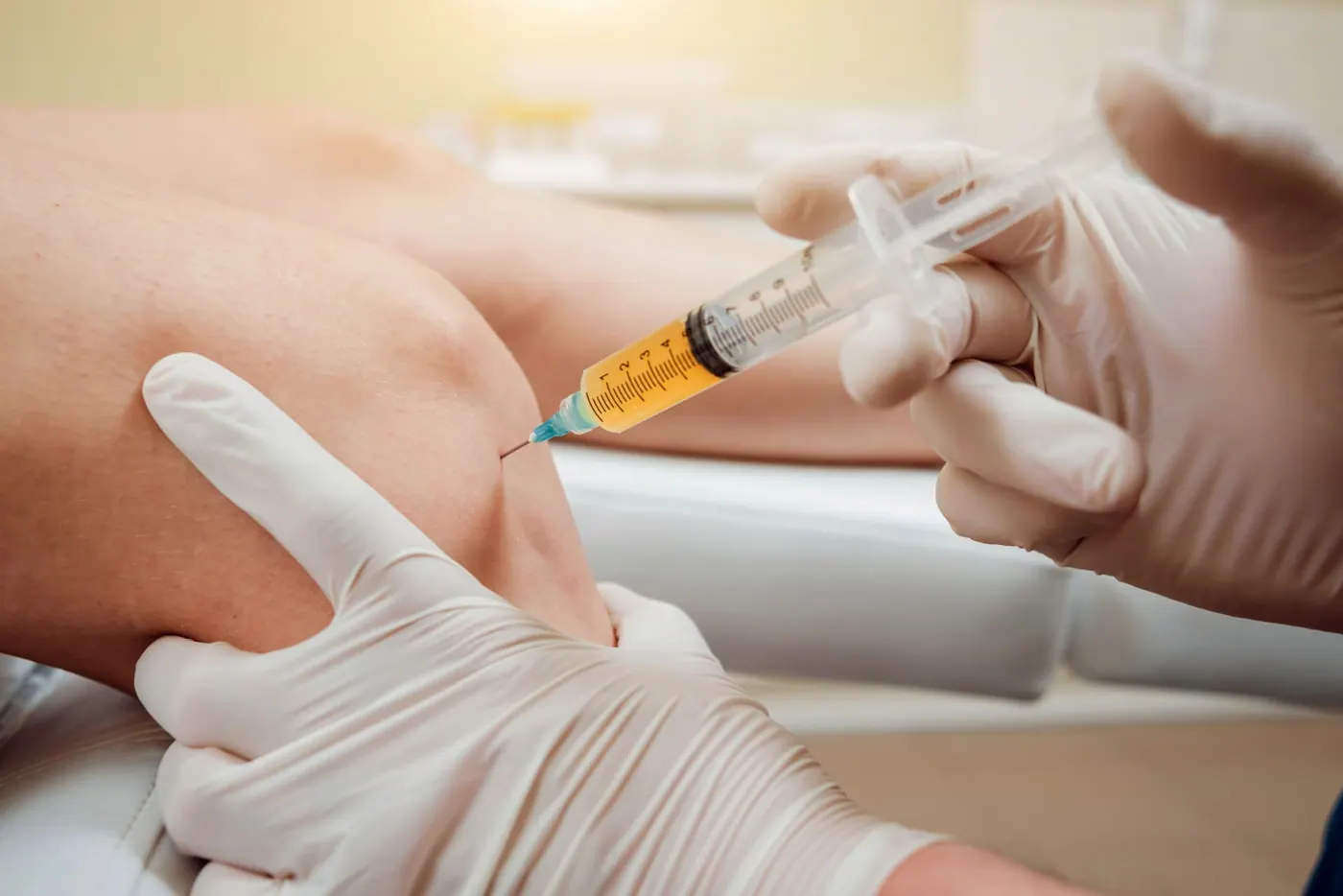
Knees that ache on stairs. An elbow that flares every time you pick up a coffee cup. These are the complaints we hear most from patients who have already tried rest, bracing, physical therapy, and a cortisone shot or two. Platelet-rich plasma, or PRP, takes a different approach: instead of muting the symptom, it uses a concentrate of your own platelets to support the body's repair signaling in the tissue that is struggling.
What PRP Actually Is
PRP starts with a small blood draw, done in office. That sample goes into a centrifuge, which separates the components of blood by density and lets us isolate the plasma layer richest in platelets. Platelets are best known for clotting, but they also carry growth factors that the body releases at the site of an injury. Concentrating them and placing them precisely into a joint or a chronically irritated tendon delivers those signals where the healing response has stalled.
Common Reasons Patients Come In
- Knee pain from wear-and-tear joint changes, especially with stairs, squatting, or long walks up city hills
- Patellar tendon irritation in runners and cyclists
- Lateral epicondylitis, better known as tennis elbow
- Medial epicondylitis, better known as golfer's elbow
- Lingering tendon soreness that improved with rest and returned the moment activity resumed
PRP vs. Cortisone
Cortisone is a steroid. It calms inflammation quickly and can be genuinely useful for a flare, but it does not change the underlying tissue, and repeated injections carry their own tradeoffs. PRP works on a different timeline. There is no instant switch-off of pain. Instead, patients typically describe a gradual change over several weeks as the tissue responds. That slower arc is the point: the goal is durable improvement rather than temporary suppression.
What the Visit Looks Like
Budget roughly 45 to 60 minutes. We review your history and exam, draw the blood, process it while you wait, numb the area, and place the injection. Many patients feel pressure more than pain during the injection itself. Soreness and mild swelling in the treated joint for a few days afterward is expected, because a controlled healing response is exactly what we are asking the tissue to produce. Most people are back at a desk the same or next day and ease back into loading the joint on a schedule we set together.
How Many Sessions
Most treatment plans run one to three sessions spaced several weeks apart, guided by the joint involved, how long the problem has been present, and how you respond to the first injection. Some patients do well with a single treatment and a maintenance visit down the road. Results vary, and PRP is not appropriate for every case, which is why the evaluation comes first.
Who Performs It
Knee and elbow PRP at Eternia is performed by Dr. Anthony Waechter, MD, at our Union Square office at 170 Grant Avenue, 4th Floor. If PRP is not the right fit for your situation, he will tell you so and point you toward a more appropriate path.
This article is for general education and is not medical advice. It is not intended to diagnose or treat any condition. Individual results vary, and suitability for PRP is determined during a clinical evaluation.
Wondering if PRP fits your knee or elbow?
Read more about our knee and elbow PRP joint injections or book a consultation and we will review your history together.
Book Your Consultation