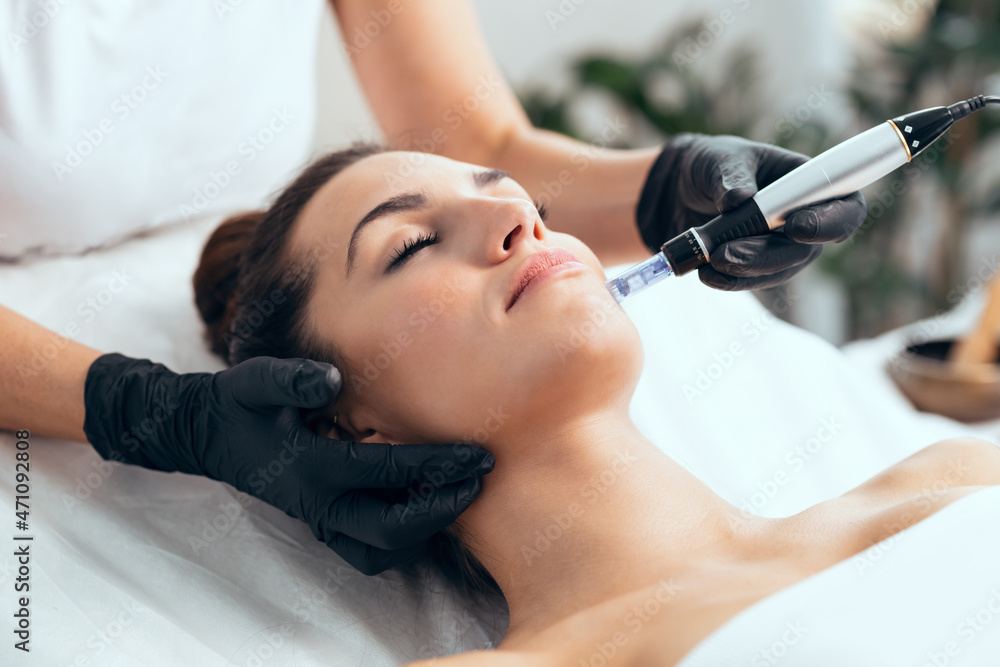
Microneedling: The Complete Guide to Collagen Induction Therapy
Written by
Nia Zameni, MSN, FNP
Allergan National Trainer
Microneedling has become one of the most popular treatments in aesthetic medicine, and for good reason. This versatile procedure addresses everything from fine lines to acne scars, with minimal downtime and impressive results. At Eternia Medspa in San Francisco, we've performed thousands of microneedling treatments and have seen firsthand how transformative it can be.
How Microneedling Works
The concept is elegantly simple: by creating thousands of tiny, controlled punctures in the skin, we trigger the body's wound healing response. This stimulates the production of collagen and elastin, the proteins responsible for firm, youthful skin.
Modern medical-grade devices use sterile, single-use needle cartridges that create precise micro-channels at controlled depths. These channels also allow topical treatments (like PRP or growth factors) to penetrate deeper than they normally could.
What Microneedling Treats
Microneedling is remarkably versatile:
- • Fine lines and wrinkles - Especially around eyes, mouth, and forehead
- • Acne scars - Breaks down scar tissue, stimulates new collagen
- • Large pores - Tightening effect reduces pore appearance
- • Uneven texture - Smooths rough, bumpy skin
- • Hyperpigmentation - Accelerates cell turnover for more even tone
- • Stretch marks - Remodels scar tissue
- • Surgical scars - Softens and flattens old scars
Microneedling + PRP: The Vampire Facial
One of the most powerful combinations in aesthetics is microneedling with PRP (Platelet-Rich Plasma). Here's how it works:
- We draw a small amount of your blood
- The blood is processed to concentrate the platelets
- Microneedling creates thousands of micro-channels
- PRP is applied and penetrates through these channels
- Growth factors supercharge the healing response
This combination, popularized as the "Vampire Facial," delivers significantly better results than microneedling alone, especially for scarring and skin quality.
Professional vs. At-Home Devices
You may have seen at-home dermarollers or microneedling devices. While these can provide mild benefits, there are key differences:
- • Needle depth: Professional devices reach 0.5-2.5mm; at-home rarely exceed 0.25mm
- • Precision: Medical devices create vertical punctures; rollers drag and can cause damage
- • Sterility: Single-use cartridges eliminate contamination risk
- • Results: Clinical treatments address deep concerns; at-home mainly helps product absorption
The Treatment Experience
Here's what to expect during your microneedling session:
- • Preparation: Skin is cleansed; numbing cream applied for 20-30 minutes
- • Treatment: Device is passed over the skin in multiple directions (30-45 minutes)
- • Serums: Hyaluronic acid or PRP applied during treatment
- • Post-care: Soothing mask or serum applied; sunscreen before leaving
Recovery and Results
Recovery is straightforward:
- • Day 1: Redness and warmth, like a sunburn
- • Days 2-3: Redness fades; some dryness or peeling possible
- • Day 4+: Most patients look normal; may notice initial glow
- • Weeks 4-8: Collagen remodeling continues; texture improves
- • Months 2-6: Full results visible with continued improvement
Who Is a Good Candidate?
Microneedling is suitable for most skin types and concerns. It's particularly excellent for:
- • Those wanting to improve texture and tone without lasers
- • Patients with acne scars seeking non-ablative treatment
- • Anyone looking to boost collagen naturally
- • People with darker skin tones (safer than many lasers)
- • Those wanting to enhance skincare product effectiveness